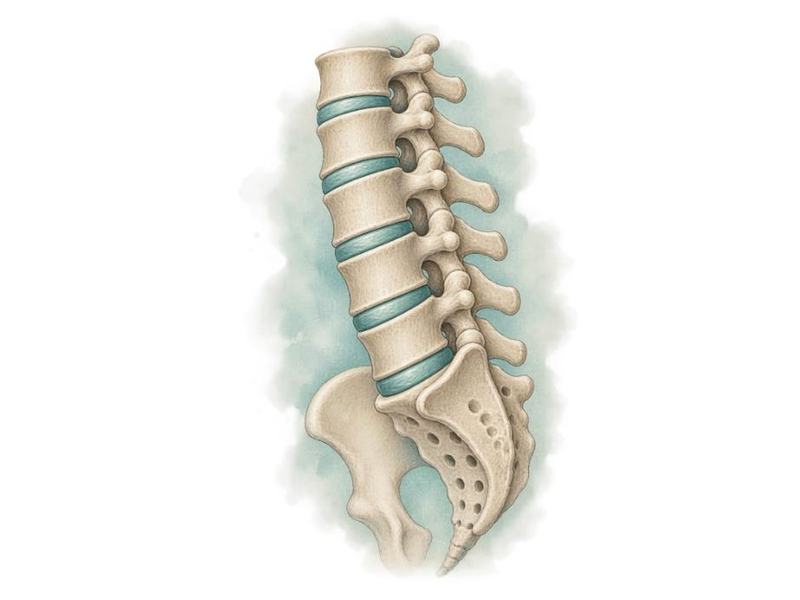
“For many patients with Grade I degenerative spondylolisthesis, the primary problem is nerve compression from spinal stenosis rather than true spinal instability.”
| ULBD | Fusion | |
|---|---|---|
| Primary goal | Relieve nerve compression while preserving spinal motion | Relieve nerve compression and stabilize the spinal segment |
| Motion at treated level | Preserved | Eliminated |
| Incision | Small muscle-sparing unilateral approach | Larger operation with screws, rods, and often an interbody cage |
| Implants required | No | Yes |
| Bone healing required | No | Yes — solid fusion is the goal |
| Recovery | Typically faster with less tissue disruption | Typically longer due to fusion healing |
| Best candidates | Grade I degenerative spondylolisthesis with stenosis-dominant symptoms and preserved stability | Significant instability, progressive slip, deformity, or substantial mechanical back pain |
| Future options | Fusion remains available if needed later | Motion is permanently eliminated at the treated level |
When the real problem is stenosis
Degenerative spondylolisthesis develops as discs, facet joints, and supporting ligaments age over time. While the vertebra may slip slightly forward, symptoms are often caused by narrowing of the spinal canal rather than the slip itself. Patients commonly experience leg pain or heaviness when walking, numbness or tingling in the legs, difficulty standing for prolonged periods, and neurogenic claudication — symptoms that improve with sitting or leaning forward.
Many patients improve with physical therapy, medications, or injections. When surgery becomes necessary, the key question is whether the spine is stable enough for decompression alone or whether stabilization with fusion is truly required.
Preserve motion whenever possible
Historically, many patients with degenerative spondylolisthesis underwent decompression and fusion together. While fusion remains an excellent operation for instability, deformity, or significant mechanical back pain, it may not be necessary for every patient with a Grade I slip.
For carefully selected patients, Dr. Li often uses unilateral laminotomy for bilateral decompression (ULBD). Through a small unilateral approach, pressure can be removed from both sides of the spinal canal while preserving much of the normal anatomy, including the spinous process, interspinous ligament, muscles, and stabilizing posterior structures.
By preserving these structures and avoiding unnecessary disruption of the facet joints, many patients can achieve excellent relief of leg symptoms without sacrificing motion at the treated level.
As experience with motion-preserving decompression has grown, Dr. Li’s fusion rate for Grade I degenerative spondylolisthesis has decreased by approximately 50%, reflecting a shift toward treating the actual source of symptoms rather than automatically treating the presence of a spinal slip.
Why avoiding an unnecessary fusion matters
A fusion can be life-changing when it is needed. However, every fusion permanently alters spinal mechanics and places greater stress on the levels above and below. Avoiding fusion when it is not necessary preserves natural motion and may simplify future treatment options.
This is particularly important in older patients, patients with multiple medical conditions, or individuals who may require additional spine procedures later in life. A smaller operation today may provide excellent symptom relief while preserving future options.
When fusion is the right operation
Motion preservation is not appropriate for everyone. Fusion may be the better choice when there is significant instability on flexion-extension radiographs, Grade II or greater spondylolisthesis, progressive deformity, severe mechanical back pain arising from the unstable segment, or loss of alignment requiring correction.
In these situations, decompression alone may leave the underlying mechanical problem untreated. Fusion addresses both the nerve compression and the instability.
Bottom line
Not every Grade I degenerative spondylolisthesis requires fusion. For many patients, the true problem is spinal stenosis rather than instability. In carefully selected cases, ULBD can provide excellent nerve decompression while preserving spinal motion, minimizing tissue disruption, and avoiding a larger operation. The goal is simple: perform the smallest operation that reliably solves the patient’s problem.