Conditions
What brings people in
Herniated discs, stenosis, myelopathy, deformity, trauma, and tumors. Each has a mechanical explanation — and a treatment ladder that starts with the least that will work.
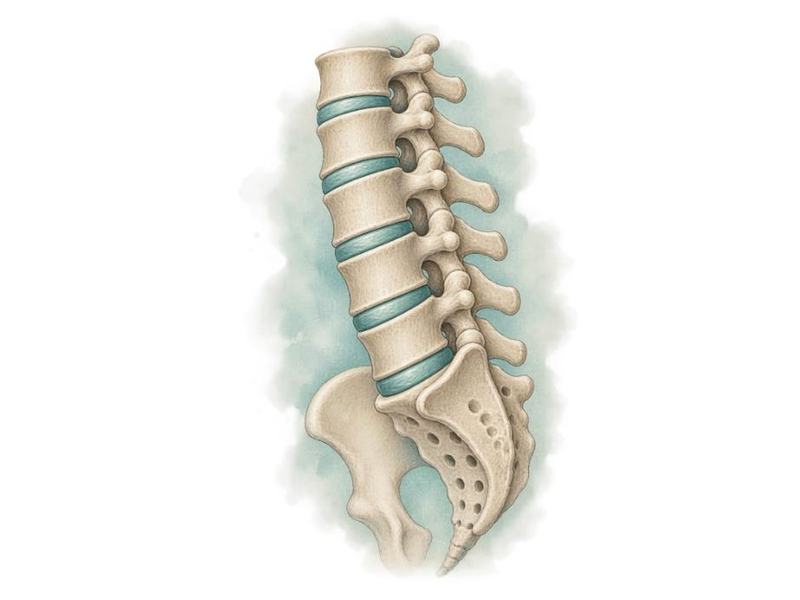
General
Herniated disc
A herniated disc is the soft inner nucleus (the “jelly”) pushing through a tear in the outer annulus (the “ring”). Endplates sit above and below the disc.
Read moreGeneral
Spinal stenosis
Narrowing of the spinal canal or nerve passages that pinches the spinal cord or nerve roots. In the lumbar spine it often causes neurogenic claudication — pain or heaviness with walking that eases with sitting or leaning forward.
Read moreCervical
Cervical myelopathy
Compression of the spinal cord in the neck. Unlike a pinched nerve, myelopathy can quietly affect balance, hand function, and walking — and it rarely improves without treating the compression.
Read moreLumbar
Spondylolisthesis
Degenerative spondylolisthesis: does every slip need a fusion? Often the pain is nerve compression from stenosis, not the slip itself.
Read moreDeformity
Scoliosis
A sideways curvature of the spine, often with rotation. In adults it may be a curve that began in youth or a new degenerative curve. Either can cause pain, imbalance, and progressive leaning.
Read moreDeformity
Kyphosis
An exaggerated forward rounding of the back. In adults it may follow fractures, degeneration, ankylosing spondylitis, or failed prior surgery, and it can make it hard to look ahead or stand without leaning on the thighs.
Read moreDeformity
Flatback syndrome
Loss of the lumbar curve (lordosis) so the person must flex the hips and knees to stand upright. It is often a consequence of prior surgery, degeneration, or a fusion that was performed without restoring alignment.
Read moreGeneral
Radiculopathy (pinched nerve)
Irritation of a spinal nerve root, typically from a disc herniation or foraminal narrowing. Cervical radiculopathy travels into the arm; lumbar radiculopathy travels into the hip, thigh, or leg.
Read moreGeneral
Spine trauma
Fractures and ligament injuries of the cervical, thoracic, or lumbar spine — from falls, collisions, or fractures through brittle bone. Some are stable; others threaten the cord or alignment and need urgent stabilization.
Read moreGeneral
Spinal tumors
Primary tumors of the spine and metastatic disease that weakens a vertebra or compresses the cord. The surgical question is how to decompress the neurologic structures and rebuild a stable column without delaying needed oncology care.
Read moreFor a baseline when reading studies, see normal spine images — x-ray, CT, and MRI of an uninjured cervical and lumbar spine.
Appointments
Ready to take the next step toward recovery?
New patients are welcome. Call the spine clinic or send a note — the team will help you find the right visit.