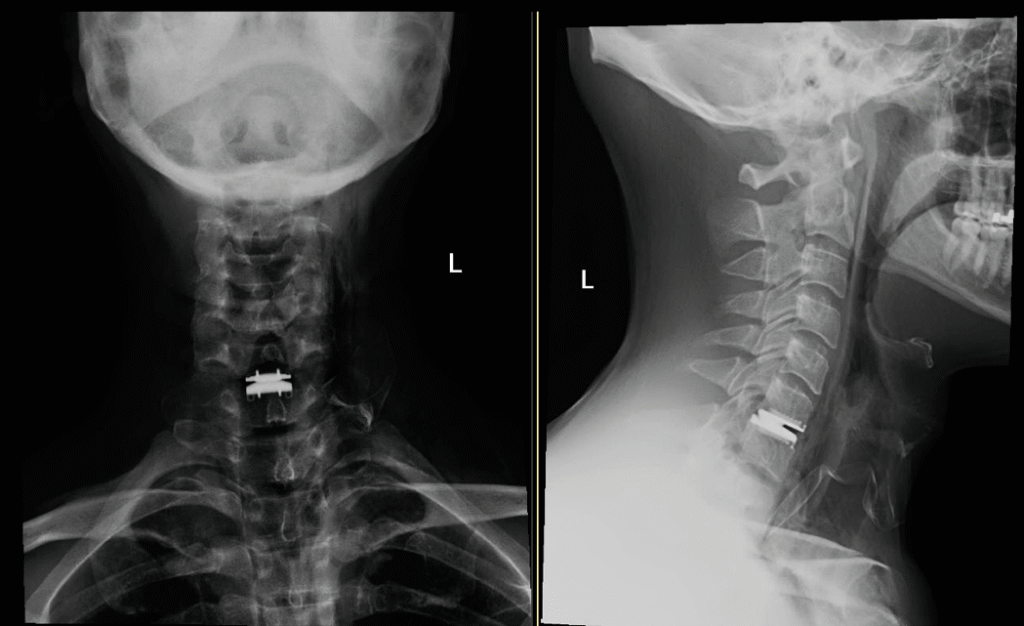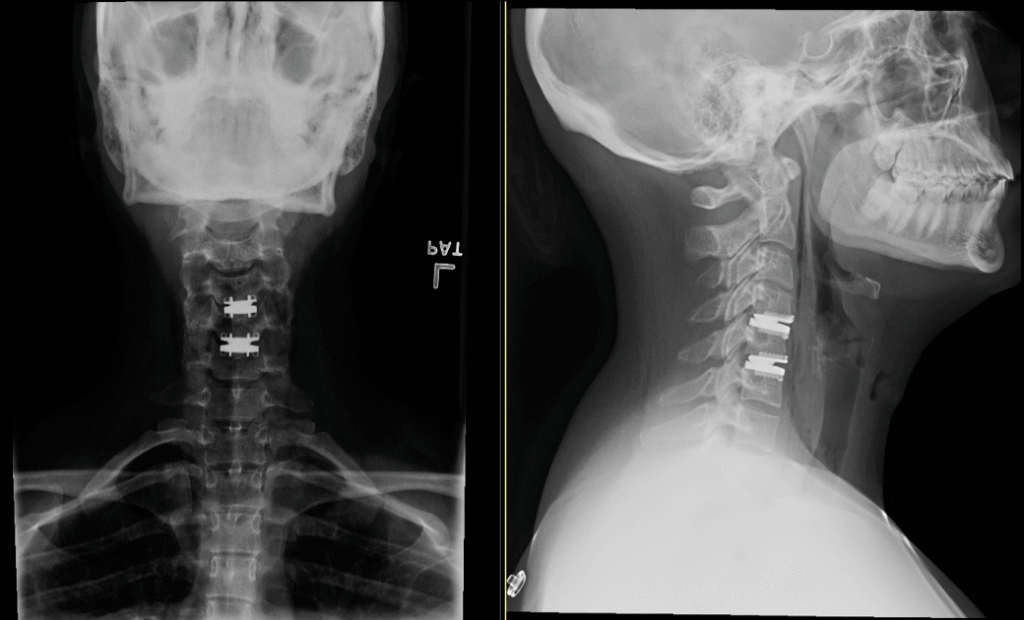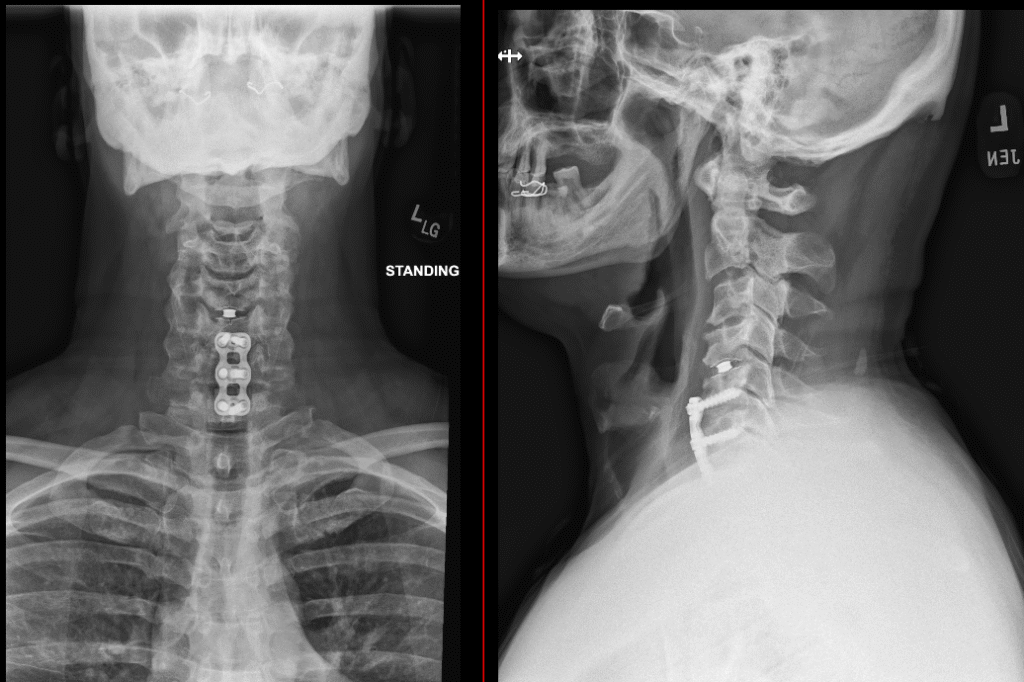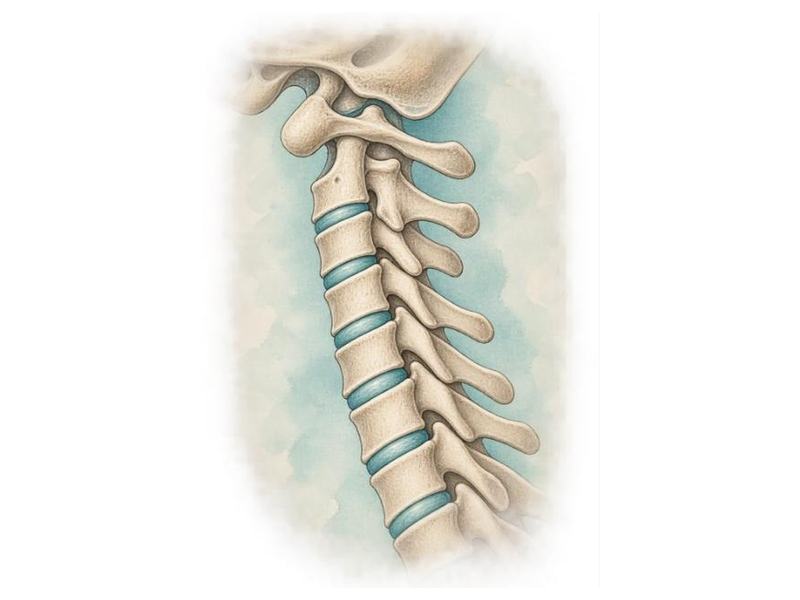
Anterior cervical disc replacement is one of Dr. Li’s defining operations. Working under the microscope, the disc and any bone spurs compressing the cord or nerve are removed through a small incision in a natural neck crease. Instead of locking the bones together, an artificial disc is seated so the segment can still bend and rotate.
Fusion remains the right answer when the joints behind the disc are badly arthritic, when alignment must be changed, or when the segment is already unstable. If those conditions are not present, Dr. Li will not recommend a fusion simply because it is familiar.
He trained with Daniel Riew at Columbia, a pioneer of cervical disc replacement, and routinely performs microscope-assisted arthroplasty as a primary option — and as part of hybrid reconstructions when one level needs motion and an adjacent level needs fusion.
What to expect
- Surgery is typically a same-day or overnight procedure through a one-inch anterior incision.
- Swallowing can feel scratchy for a short period; most patients are walking the evening of surgery.
- A soft collar may be used briefly for comfort, not as a long-term restriction.
Recovery
- Many people return to desk work within two weeks and to unrestricted activity as the disc heals into bone.
- Because the segment still moves, adjacent discs are spared the extra load that a fusion can create.